Affordable Concrete Contractor in Flagstaff: Understanding Project Costs
Concrete construction represents a significant investment for many homeowners and business owners in Flagstaff, Arizona. Whether you’re planning a new driveway, installing a backyard patio, replacing deteriorated concrete, or preparing a foundation for construction, understanding the potential costs can help you make informed decisions. The final price depends on several factors, and knowing what influences an estimate makes it easier to plan a realistic budget.
Finding an affordable concrete contractor in Flagstaff involves more than searching for the lowest advertised price. Concrete projects require careful preparation, suitable materials, experienced labor, and proper installation techniques. A low estimate may seem appealing at first, but the scope of work matters just as much as the total cost. Property owners should understand what a contractor includes before comparing competing proposals.
Flagstaff’s climate and geography also influence concrete construction. The city’s elevation, freezing winter temperatures, seasonal snowfall, and summer monsoon storms create conditions that contractors must consider during planning. Site access, ground conditions, drainage, and installation timing can affect the amount of work required. These factors help explain why two projects with similar dimensions may carry different costs.
Fortunately, affordable concrete construction does not have to mean sacrificing quality. Homeowners can often manage expenses by choosing practical finishes, planning projects carefully, and working with contractors who provide clear estimates. The goal is to find a solution that balances the initial investment with long-term performance. This guide explains the factors that influence concrete project costs in Flagstaff. It also explores common residential and commercial applications, potential budget considerations, and the questions property owners should ask before hiring a contractor.
Looking for an affordable concrete contractor in Flagstaff, AZ? Learn what affects concrete driveway, patio, and replacement costs, how to compare contractor estimates, and practical ways to save money without sacrificing quality.
What Determines the Cost of Concrete Work in Flagstaff?
Concrete pricing depends on the specific requirements of each installation. Although project size plays an important role, square footage alone cannot determine the final cost. Contractors must consider site preparation, material requirements, labor, accessibility, finishing methods, and other conditions that influence construction. For example, installing a concrete patio on a relatively level, accessible property may involve straightforward excavation and preparation. A similar patio on a steep lot could require additional grading, more complicated forming, or special equipment access. Even when both projects cover the same area, the labor and preparation requirements may differ substantially.
Existing site conditions also affect pricing. A new installation on an undeveloped section of a property may require clearing vegetation and preparing the ground. A replacement project usually begins with demolition and removal of the existing concrete. Contractors must account for these activities when developing an estimate. Material specifications introduce another variable. Different applications may require different slab thicknesses, reinforcement, concrete mixtures, or construction details. A residential walkway does not necessarily require the same design as a driveway that supports vehicles. Likewise, a foundation must follow its structural requirements rather than a generic flatwork specification.
Property owners should expect a contractor to evaluate these factors before providing a meaningful estimate. Understanding the proposed work helps explain the price and provides a stronger basis for comparing options.
How Project Size and Layout Influence Concrete Pricing
The dimensions of a concrete installation directly influence the amount of material and labor required. Larger projects generally use more concrete, require more preparation, and take longer to complete. However, the relationship between square footage and cost is not always straightforward. A large rectangular slab may be relatively efficient to form and finish. A smaller installation with curved edges, multiple elevations, or numerous obstacles can require more detailed labor. Contractors must consider the shape of the project as well as its total area.
Driveways provide a useful example. A straightforward driveway connecting a garage to the street may involve fewer complications than a circular driveway with multiple branches or decorative borders. Both projects may serve the same purpose, but their layouts create different construction requirements. Patio construction follows a similar pattern. A simple rectangular patio typically requires less intricate forming than a design with curved sections, steps, or several connected surfaces. Decorative features can further increase the time required for finishing.
When planning a project, homeowners should consider which design elements provide the greatest practical value. A straightforward layout may offer the desired function without introducing unnecessary complexity. Contractors can help identify opportunities to simplify a design while preserving the property’s appearance and usability.
Site Preparation: A Major Factor in Concrete Installation Costs
Site preparation often accounts for a meaningful portion of a concrete construction budget. Before workers can place concrete, they need a suitable area with appropriate elevations, drainage, and supporting conditions. The amount of preparation varies from one property to another. Some sites require limited excavation and grading, while others need more extensive work to establish a stable base. Contractors may also encounter existing landscaping, underground utilities, rocks, or other obstacles that affect the installation.
In Flagstaff, property conditions can vary considerably between neighborhoods and individual lots. Sloped terrain, rocky ground, and established trees may complicate excavation or equipment access. Contractors must evaluate these conditions rather than assuming every project will require the same preparation.
Excavation, Grading, and Base Preparation
Excavation establishes the space needed for the concrete and its supporting materials. Contractors remove soil or other material as required by the installation design. They then prepare the area to support the finished surface. Grading determines the elevation and slope of the installation. Proper grading helps concrete surfaces function as intended and directs water toward suitable drainage areas. This becomes particularly important for driveways and patios located near homes.
Base preparation helps support the concrete and reduce uneven settlement. Depending on the project, contractors may need to place and compact suitable base materials. The required preparation depends on soil conditions, expected loads, and construction specifications. These activities may not be visible after the project is complete. Nevertheless, they can have a substantial influence on the performance of the finished concrete.
Property owners should ask whether an estimate includes the necessary excavation, grading, and base preparation. Understanding these details can help prevent confusion when comparing proposals.
Accessibility and Equipment Requirements
Construction access can also influence labor and equipment costs. Contractors need a practical way to deliver materials, move equipment, and complete the installation safely. A driveway located directly beside the street may provide convenient access for workers and equipment. A backyard patio behind an occupied home can present a different challenge, particularly when narrow gates, landscaping, or structures limit access.
Restricted access may require smaller equipment, additional labor, or alternative material delivery methods. These adjustments can increase the time needed to complete the project. Property owners can help by discussing access conditions during the initial consultation. Providing accurate information about gates, fences, slopes, and obstacles allows the contractor to evaluate the work more effectively.
Concrete Driveway Costs in Flagstaff
Driveway installation is one of the most common residential concrete projects. Homeowners may need a driveway for new construction, improved vehicle access, or replacement of an existing surface. The cost of a concrete driveway depends on its size, thickness, layout, preparation requirements, and finish. Contractors must also consider drainage and how the new surface connects with the garage, street, or adjoining pavement.
A driveway that supports regular passenger vehicle traffic may have different construction requirements from one that must accommodate heavier vehicles or equipment. The proposed use should influence the design and material specifications.
New Driveway Installation Versus Replacement
New driveway construction typically begins with preparing the installation area. The contractor evaluates the ground, establishes the required grade, and completes the base preparation before placing concrete. Replacement projects introduce additional work. Contractors must remove the existing driveway and manage the resulting debris. They also need to inspect the exposed ground before preparing the new installation.
Removing the old surface provides an opportunity to identify conditions that may have contributed to deterioration. Poor drainage, settlement, or inadequate support can affect the replacement if contractors fail to address them. For this reason, property owners should avoid comparing a new driveway estimate directly with a replacement estimate without considering the additional scope of work.
JH Concrete provides concrete driveway installation services in Flagstaff for homeowners planning new surfaces and replacement projects.
Concrete Patio Costs and Budget Considerations
Concrete patios offer homeowners a practical way to expand their outdoor living space. They can provide room for dining, entertaining, outdoor furniture, and other activities without requiring a complex structure. Patio costs depend on dimensions, location, ground conditions, finishing choices, and the overall design. A straightforward patio on level ground may require less preparation than one installed on a sloped property or near existing structures.
The patio’s connection to the home also affects planning. Contractors must establish suitable elevations and drainage so water does not collect against exterior walls or foundations. Changes in elevation may require steps or other transitions.
Standard Concrete Versus Decorative Finishes
Finishing choices can influence the overall project budget. A conventional broom finish generally involves a different amount of labor and fewer specialized materials than an elaborate stamped concrete design. Stamped concrete requires additional tools, preparation, and careful timing during placement. Decorative coloring and pattern work may also increase labor and material requirements.
These finishes can create attractive outdoor spaces, but homeowners should decide whether the additional appearance-related features justify the investment. A standard concrete patio can still provide a functional and appealing surface. Property owners who prioritize usable outdoor space may find that a simpler finish meets their needs while helping control costs. Homeowners interested in patio construction can explore JH Concrete’s concrete patio services to learn more about available applications.
Concrete Removal and Replacement Costs
Concrete removal and replacement projects involve more than installing a new surface. Contractors must first remove the existing concrete, transport debris away from the work area, and prepare the exposed site for the replacement. The cost of removal depends on the amount and thickness of the existing concrete, site accessibility, and the equipment required. Reinforced concrete or installations located near structures may require additional care during demolition. Disposal requirements also affect the project. Contractors must manage the debris and arrange for appropriate transportation or disposal. Property owners should clarify whether these services appear in the estimate.
Why Replacement Costs Can Vary
Two deteriorated concrete surfaces may look similar but require different amounts of work. For example, one driveway may have extensive surface cracking but relatively stable supporting conditions. Another may show settlement caused by problems beneath the slab. Once contractors remove the existing concrete, the second project could require additional preparation before replacement.
Drainage conditions can create further differences. If the original installation directed water toward the home or allowed runoff to collect, the replacement may need a revised grade or layout. These considerations help explain why contractors often need to inspect the property before providing a final proposal.
JH Concrete specializes in concrete removal and replacement rather than standalone concrete repair services. Homeowners can discuss whether a complete replacement aligns with their project’s needs.
Concrete Foundations, Garage Slabs, and Structural Applications
Foundations and garage slabs introduce requirements that differ from ordinary decorative flatwork. These installations may need to support structures, vehicles, equipment, or other substantial loads. The design must account for the intended use and applicable construction specifications. Contractors may need to follow engineering plans, reinforcement details, and inspection requirements.
Foundation costs depend on the structure, excavation needs, ground conditions, and approved design. A small residential addition may involve different construction requirements from a larger building foundation. Garage slabs also vary. A standard residential garage may have different specifications from a workshop that will support heavy equipment or specialized machinery.
Property owners should avoid selecting structural concrete work based solely on the lowest estimate. Contractors must follow the required plans and specifications, even when those requirements increase the initial cost. A clear proposal should identify the work included and explain how the contractor will coordinate the concrete installation with the larger construction project.
How Flagstaff’s Climate Can Affect Concrete Project Costs
Flagstaff’s weather introduces considerations that property owners in warmer Arizona communities may not encounter as frequently. Winter freezing, snowfall, and seasonal temperature changes can influence both construction scheduling and installation methods. Concrete requires appropriate conditions to develop strength after placement. Cold temperatures can slow this process, and freezing conditions may require protective measures. Contractors must evaluate the forecast and determine whether the planned work can proceed safely.
Weather-related precautions can affect labor, scheduling, and material handling. In some situations, postponing installation may be more appropriate than proceeding under unfavorable conditions. Summer weather introduces different challenges. Monsoon storms can develop quickly, and heavy rainfall can interfere with freshly placed concrete. Contractors must plan around these conditions and protect the installation when necessary.
Why Drainage Planning Matters
Water management represents another important consideration for Flagstaff properties. Snowmelt and seasonal storms can create runoff that affects driveways, patios, walkways, and surrounding landscaping. Contractors should evaluate how the new concrete will influence drainage. A poorly graded surface can direct water toward structures or create areas where moisture collects.
Correcting drainage problems after installation may require additional work. Addressing these concerns during the planning stage can help avoid preventable complications. Although drainage improvements may add to the initial project scope, they can contribute to better long-term performance.
Labor, Materials, and Finishing: Understanding What You’re Paying For
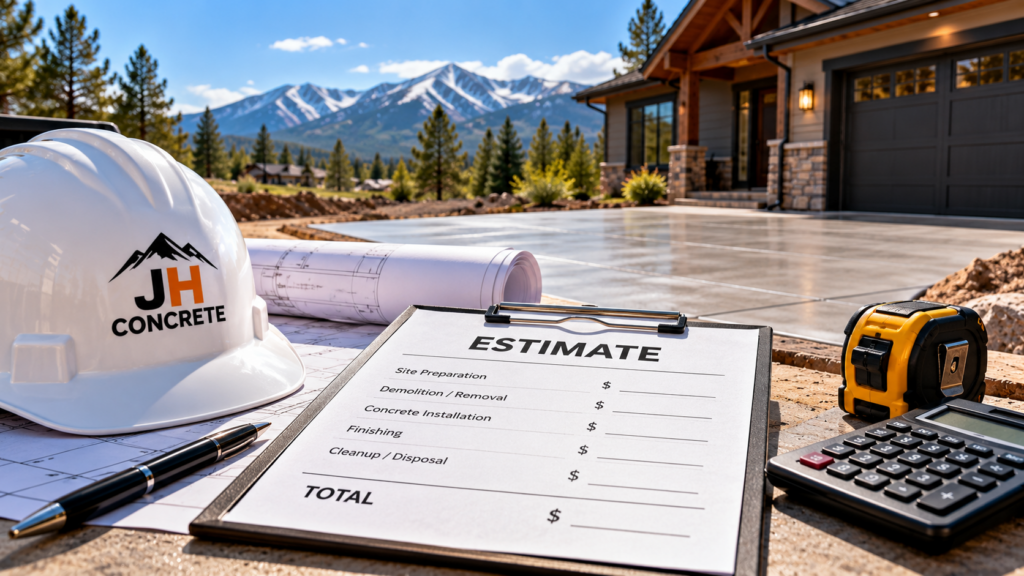
A concrete estimate reflects several categories of work and materials. Understanding these components helps property owners evaluate whether the proposed price matches the installation requirements. Material costs include the concrete itself and any specified reinforcement, base materials, forming supplies, or finishing products. The quantity and type of materials depend on the project design. Labor covers site preparation, forming, placement, finishing, and other construction activities. Projects with complicated layouts, difficult access, or decorative details may require additional time and specialized skills.
Equipment costs can also influence the estimate. Excavation, demolition, grading, and concrete placement may require machinery suited to the property’s conditions. Finally, contractors must account for scheduling, transportation, debris handling, and other operational requirements associated with completing the work. A detailed estimate helps property owners understand the proposed scope. It also provides an opportunity to identify exclusions or assumptions that could affect the final cost.
How to Compare Concrete Contractor Estimates in Flagstaff
Comparing estimates requires more than placing two prices side by side. Property owners should determine whether each contractor proposes the same work, materials, and preparation methods. A lower estimate may reflect a more efficient construction approach. However, it could also exclude activities that another contractor includes. Without reviewing the details, homeowners cannot accurately compare the value of competing proposals.
Review the Scope of Work
Start by examining what each estimate includes. Look for information about demolition, excavation, grading, base preparation, concrete placement, finishing, and cleanup. If the project involves replacement, determine whether the contractor includes removal and disposal of the existing concrete. For new installations, ask about the preparation required beneath the slab.
The proposal should also identify the general dimensions and finish. Structural projects may require additional documentation tied to approved plans.
Ask About Materials and Construction Details
Different installations may require different concrete specifications. Property owners should ask contractors to explain the proposed thickness, reinforcement where applicable, joint planning, and curing approach. These details help clarify whether the estimate reflects the project’s intended use.
Homeowners do not need to become concrete construction experts. However, understanding the major components can make conversations with contractors more productive.
Clarify Changes and Unexpected Conditions
Construction projects sometimes reveal conditions that were not visible during the initial evaluation. Excavation or demolition may expose unsuitable base materials, buried obstacles, or other concerns. Property owners should ask how the contractor handles changes to the original scope. A clear process for discussing additional work and obtaining approval can help prevent misunderstandings. Written documentation provides a useful reference throughout the project.
Practical Ways to Keep Concrete Project Costs Manageable
Affordable concrete construction begins with realistic planning. Homeowners can often make choices that reduce unnecessary expenses without compromising the installation’s essential requirements. One approach involves prioritizing function over elaborate design. A straightforward driveway or patio layout may require less forming and finishing labor than a highly customized installation. Selecting a conventional finish can also reduce decorative costs.
Planning related improvements together may create opportunities for more efficient scheduling. For example, a homeowner who needs a new driveway and an adjoining walkway can discuss both projects during the same consultation. The contractor can then evaluate the combined scope and determine whether coordinated construction offers practical advantages. Property owners should also prepare accurate project information before requesting estimates. Knowing the desired dimensions, intended use, and preferred finish helps contractors develop proposals that reflect actual needs.
Avoid Cutting Costs on Essential Preparation
Some construction activities deserve particular attention because they influence long-term performance. Proper base preparation, drainage, suitable materials, and curing practices should not become optional simply to reduce the initial price. Skipping necessary work can create problems that outweigh the original savings. An installation that experiences avoidable settlement or drainage issues may require additional expense later. The goal is to eliminate unnecessary complexity while preserving the construction methods the project requires.
Homeowners should ask contractors where adjustments are possible and where reducing the scope could affect performance.
Affordable Concrete Doesn’t Always Mean the Lowest Price
The least expensive estimate is not automatically the best financial decision. Concrete construction involves both an initial investment and the expectation that the finished installation will provide useful service over time. A properly planned driveway, patio, or walkway can serve a property for many years. However, long-term performance depends on installation quality, site conditions, maintenance, and environmental exposure.
Property owners should consider whether the contractor understands the project, proposes appropriate preparation, and communicates clearly about the work. Experience also matters. Contractors who regularly perform similar installations may be better equipped to identify complications before construction begins. Their recommendations can help homeowners avoid unsuitable design choices or unrealistic expectations.
This does not mean the highest estimate always represents the best value. Instead, homeowners should compare qualifications, project details, and the proposed work alongside the total price. A fair estimate should reflect the actual requirements of the project rather than promise results that the contractor cannot reasonably guarantee.
Why Local Experience Matters When Budgeting for Concrete in Flagstaff
Flagstaff properties present a range of construction conditions. Some residential lots provide straightforward access and relatively level terrain. Others include slopes, rocky ground, mature trees, or limited space for equipment. Local contractors who regularly work in the area may recognize these conditions and ask relevant questions during the initial evaluation.
Climate familiarity also helps with scheduling. Flagstaff’s seasonal weather can influence installation windows, curing requirements, and site preparation. Contractors should account for these factors when developing realistic project timelines. Local experience does not eliminate unexpected conditions or guarantee a particular price. However, it can support more informed planning and clearer discussions about the work. Property owners should still verify licensing, review relevant project experience, and compare estimates before making a hiring decision.
JH Concrete Inc.: Concrete Construction Services in Flagstaff Since 1995
For homeowners and business owners searching for an affordable concrete contractor in Flagstaff, JH Concrete Inc. offers an established local option. Founded in 1995 and owned by Jim Herre, the company provides residential, commercial, and decorative concrete construction services. JH Concrete handles projects involving driveways, patios, walkways, foundations, garage slabs, decorative concrete, and concrete removal and replacement. Each installation requires an approach suited to the property’s conditions and the intended use of the finished surface.
Rather than relying on generic pricing, property owners can discuss their specific project requirements and request an estimate based on the proposed work. This process helps establish expectations about preparation, installation, and other relevant construction details. The most effective way to manage concrete costs is to understand the scope before construction begins. A clear plan allows homeowners to prioritize important features, evaluate available options, and make informed decisions about their investment.Visit JH Concrete Inc. to explore its services and learn more about the company.
Planning a concrete project in Flagstaff, Arizona? Contact JH Concrete Inc. at (928) 606-1350 to discuss your project and request an estimate.
Need Help With Concrete Cleanup and Debris Removal?
Planning a concrete project or dealing with leftover construction debris? Proper cleanup and waste removal help keep your property organized throughout the construction process. Peak Roll-Off Dumpsters, a locally owned company right here in Flagstaff, Arizona, provides convenient roll-off dumpster rentals for construction projects, renovations, demolition debris, and general property cleanups. Whether you’re a homeowner or contractor, having a dumpster on-site can make debris management easier. Visit Peak Roll-Off Dumpsters to learn more about local dumpster rental options and request a rental. Confirm accepted materials and disposal requirements before loading concrete debris.